

Have You Been in a Car Accident in Charlotte NC?
If you have been in a car accident in Charlotte, NC, the most important thing to know is that even a “minor” crash can lead to pain, stiffness, and hidden soft-tissue injuries that show up hours or days later. Complete Healthcare in Charlotte says its team helps auto accident patients with back pain, neck pain, whiplash, headaches, shoulder pain, hip pain, wrist injuries, knee injuries, and radiating arm or leg pain after collisions, and the practice notes that its doctors bring more than 50 years of combined chiropractic experience to care for injured patients. Complete Healthcare for Charlotte auto accident and wellness care can be a helpful place to start if you are trying to understand your next step after a crash.
Charlotte drivers deal with dense traffic patterns, fast-changing road conditions, and frequent congestion around major corridors such as Independence Boulevard, I-77, I-85, South Boulevard, and the Uptown grid. That means the aftermath of a collision can be especially disruptive for commuters, families, and students traveling through neighborhoods like South End, NoDa, Plaza Midwood, Ballantyne, University City, and Steele Creek. Whether the crash happened near the intersection of Tryon Street and Trade Street, by SouthPark Mall, around UNC Charlotte, or on a commute toward Lake Norman or Pineville, your body can absorb force in ways that are not obvious right away.
This guide explains what to do after a car accident in Charlotte, what symptoms matter most, why timely evaluation is important, and how chiropractic care is commonly used in auto injury recovery. It also gives you a practical framework for documenting pain, protecting your health, and making informed decisions after a collision. If you are searching for a Charlotte car accident chiropractor, a well-structured resource like car accident chiropractor care in Charlotte NC can help you understand the typical services offered after a wreck and what questions to ask during your first visit.
Why car accident injuries in Charlotte are easy to overlook
Many people assume they are fine if they can walk away from a crash, exchange information, and drive home. In reality, the body can mask pain during an adrenaline spike, and inflammation often increases later. That delay is one reason chiropractors and injury-care providers frequently encourage early evaluation after a collision, even when symptoms are mild. In Charlotte, where drivers often move from stop-and-go traffic to faster highway speeds in a short period of time, the change in force during impact can be enough to strain muscles, ligaments, joints, and the spine.
Whiplash is one of the best-known examples. The neck can move rapidly back and forth during a rear-end collision, leading to pain, reduced range of motion, headaches, or shoulder tightness. But whiplash is not the only concern. People may also experience lower back pain from seat-belt force, chest soreness from bracing, rib irritation, wrist pain from gripping the steering wheel, or knee pain from striking the dashboard. Some symptoms are subtle at first, such as numbness, tingling, fogginess, or discomfort when sitting for long periods. These can still interfere with daily life, commuting, driving, and sleep.
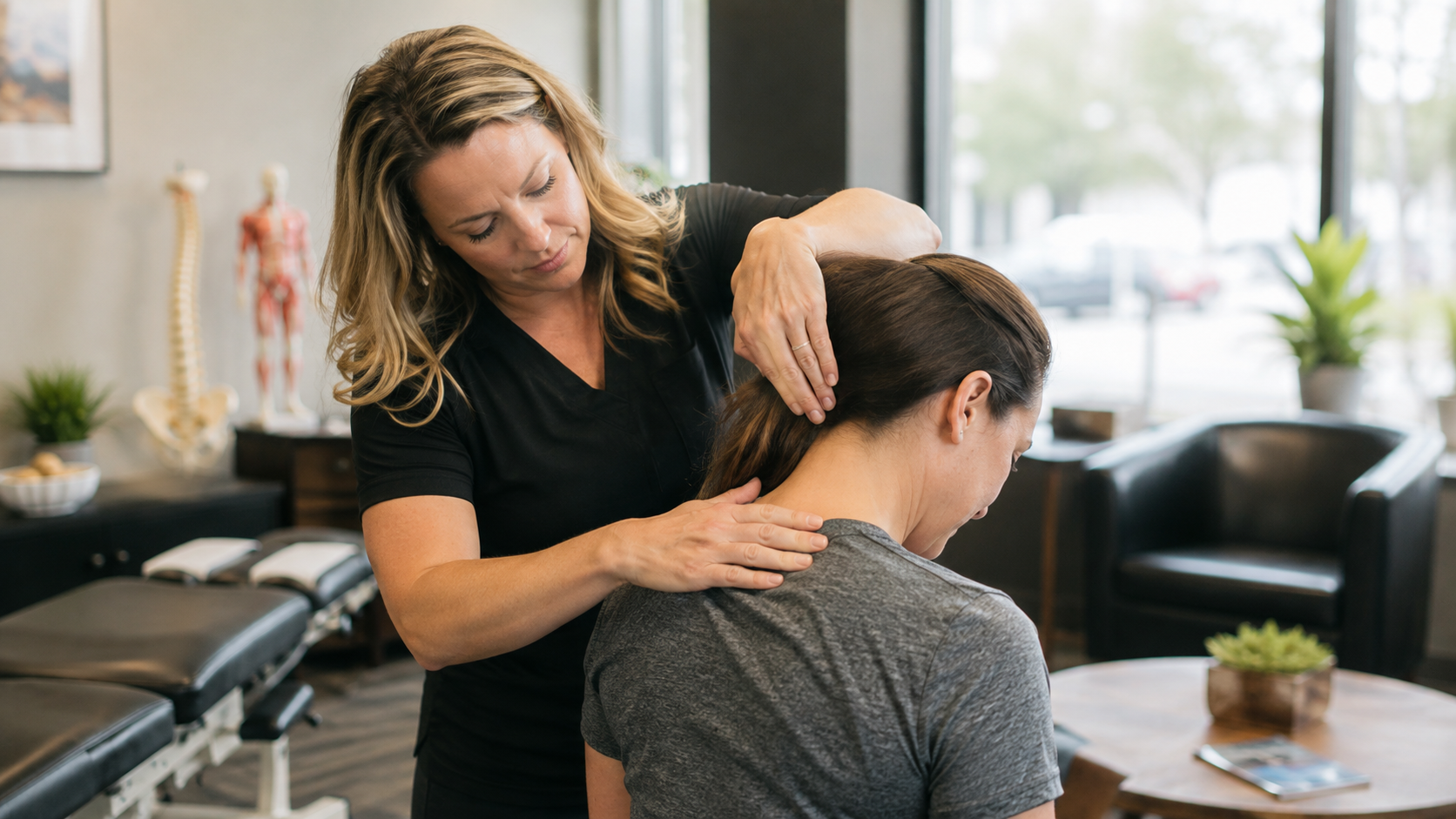
Complete Healthcare’s Charlotte car accident page emphasizes that the clinic helps with a wide range of accident-related complaints, including back pain, neck pain, whiplash, headaches, shoulder pain, hip pain, wrist injuries, knee injuries, and radiating arm or leg pain. That matters because crash injuries are rarely limited to one body part. A complete evaluation is often more useful than focusing only on the most painful area, since the source of pain can involve the neck, upper back, lower back, joints, or surrounding soft tissue.
What to do right after a car accident in Charlotte
The first priority after any collision in Charlotte is safety. If anyone is seriously injured, call emergency services immediately. Move only if it is safe to do so, and follow the instructions of police and medical responders. Once the scene is secure, exchange information, document the vehicles and roadway, and take photos if you can do so without putting yourself at risk. In a city with busy roads and frequent traffic backups, clear documentation can matter later when insurance claims are reviewed.
After the immediate scene is handled, pay attention to your body. Do not assume the absence of extreme pain means you are injury-free. Stiffness, mild soreness, dizziness, nausea, headache, or pressure in the neck or lower back can develop later. If you notice worsening symptoms after leaving the crash site, that is a strong reason to seek care promptly. Early assessment can also create a clearer record of what changed after the accident, which may be important if you later need treatment documentation.
It is also smart to contact a local provider familiar with collision-related injuries. A Charlotte-based practice that routinely sees auto accident patients is more likely to understand common patterns in soft-tissue injuries, posture changes, and pain referral. That can make your first visit more efficient and can help you get answers about whether your pain pattern fits a strain, sprain, whiplash pattern, or something that needs additional medical workup.

Common car accident symptoms Charlotte patients report
After a crash, symptoms do not always appear in neat categories. A person may complain of neck pain but later discover that the main problem is reduced mobility in the upper back or muscle guarding in the shoulders. Another patient may feel mostly fine until they try to rotate their head while driving or bend over to pick up groceries. In Charlotte, where daily life often involves commuting, school drop-offs, errands, and traffic delays, even a small amount of stiffness can become a major inconvenience.
The most common post-accident complaints include neck pain, headache, back pain, muscle spasms, shoulder pain, soreness between the shoulder blades, limited motion, and pain that travels into the arms or legs. Some people also report dizziness, sleep disruption, fatigue, sensitivity to movement, or pain with sitting and standing. In more persistent cases, patients can develop compensatory habits that change the way they walk, sit, or turn, which may create secondary problems over time.
Because Complete Healthcare specifically lists back pain, neck pain, whiplash, headaches, shoulder pain, hip pain, wrist injuries, knee injuries, and radiating arm or leg pain as conditions they help address after accidents, the practice is clearly focused on the practical injuries many Charlotte drivers experience after a collision. That is useful because these injuries are often interconnected. A neck strain may contribute to headaches, while a low-back injury may affect the hip or cause leg discomfort. A good evaluation looks at the whole pattern rather than one isolated symptom.
How chiropractic care can help after a Charlotte car accident
Chiropractic care is often used after car accidents because it focuses on the musculoskeletal system: the spine, joints, muscles, and movement patterns that can be disturbed by impact. The goal is not simply to mask pain, but to help restore motion, reduce irritation, and support recovery as the body heals. For many patients, that may include spinal adjustments, soft-tissue techniques, mobility work, stretching, exercise guidance, and supportive rehabilitation strategies.
In Charlotte, this type of care is especially relevant for people whose injuries are affecting work, driving, exercise, and everyday responsibilities. Someone who commutes from Ballantyne to Uptown may find that limited neck rotation makes lane changes uncomfortable. A parent driving across town may discover that back pain makes it hard to lift children or load groceries. A student at UNC Charlotte may notice that long lecture sessions or sitting through exams increases symptoms. When treatment is targeted to the injury pattern, it can be easier to keep life moving while the body recovers.
Complete Healthcare describes its Charlotte auto accident services as chiropractic care, personal injury treatment, and rehabilitation services for patients dealing with pain after a car crash. The clinic also notes that Dr. Christopher Beller and the team help patients recover from a broad spectrum of accident-related injuries. That combination of pain care and rehabilitation support is important because recovery after a wreck is rarely just about one office visit. It often requires follow-up, progress checks, and adjustments to the care plan as symptoms change.
If you are comparing providers, one factor worth considering is experience with collision injuries specifically. A general wellness approach can be helpful, but auto accident recovery often requires documentation, careful symptom tracking, and an understanding of injury mechanisms. That is where a focused clinic can add value. If you want to review a Charlotte practice’s positioning in more detail, the page on Charlotte auto accident chiropractic evaluation and rehab is a relevant place to compare how a provider frames crash-related care.
Why early care matters after a collision in Charlotte
One of the biggest mistakes people make after a wreck is waiting too long. They may hope the pain will fade, or they may be too busy handling a vehicle repair, a rental car, or insurance questions. But delayed care can make it harder to understand what injury came from the crash and what symptoms developed later from compensation patterns. Early care also helps identify whether the pain is purely muscular or whether there are signs that require referral or additional imaging.
In practical terms, early care can mean less guesswork. If your neck hurts within a day or two, your provider can compare those symptoms with your crash details, range of motion, tenderness, and functional limits. If your lower back becomes tight after sitting at work, that pattern can be documented and monitored. If headaches begin after a rear-end collision, the timing may point toward a whiplash-related issue. The sooner a pattern is recognized, the easier it can be to build an effective plan.
There is also a documentation advantage. Auto injury cases often involve insurance records, treatment notes, and proof of continued symptoms. A clear clinical record created soon after the accident can be valuable. It does not just help with claims; it also helps the patient and provider understand whether treatment is working. In Charlotte, where people often juggle busy schedules and long commutes, this clarity can save time and reduce stress.
What happens during a car accident chiropractic visit in Charlotte
A first chiropractic visit after a car accident usually begins with a conversation about the crash, the onset of symptoms, and the parts of the body that hurt. The provider may ask how the accident happened, whether there was a rear-end, side-impact, or head-on collision, whether your car was drivable, and whether you received emergency care. These details help establish the likely forces involved and the structures that may have been affected.
Next comes a physical assessment. That can include posture observation, range-of-motion checks, palpation of tender areas, reflex or neurological screening when indicated, and movement tests that reveal how the injury affects daily activity. The chiropractor may also evaluate whether your symptoms are consistent with soft-tissue strain, joint restriction, or protective muscle spasm. If the provider believes additional medical testing is needed, that recommendation may be made during or after the exam.
Once the assessment is complete, a care plan is typically discussed. Depending on the injuries found, treatment may include gentle adjustments, soft-tissue work, mobility exercises, ice or heat instructions, activity modification, and follow-up visits. The point is to match the care to the injury pattern rather than using a generic approach. Many Charlotte patients appreciate that this type of plan is often practical and conservative, focusing on gradual improvement rather than invasive procedures.
How Charlotte geography and traffic patterns affect accident recovery
Charlotte is a city where geography and mobility habits matter. Drivers regularly move between major highways, arterial roads, and dense urban streets. A commute that starts in a quieter neighborhood can quickly shift to heavy traffic near Uptown, South End, or the I-277 loop. Weekend errands may involve running from one side of the city to another, passing through commercial zones like SouthPark, University City, or the areas near Cotswold and Matthews. That variety can make post-accident pain more noticeable because the body has to adapt to changing seating positions, braking patterns, and road conditions.
Local landmarks and destinations also shape how people use their bodies after injury. If you are trying to drive to Freedom Park, the Charlotte Rail Trail, Romare Bearden Park, or a campus event at UNC Charlotte, neck rotation and endurance may matter more than you expect. If you are commuting past the NASCAR Hall of Fame district or navigating busy intersections near Independence Boulevard, quick reaction time and upper-body comfort become important. Even routine local travel can highlight a crash-related problem.
That is why Charlotte-specific care should take the local lifestyle into account. A treatment plan that only looks at pain in the office is less useful than one that considers the movements you need for work, family, and community life. The best recovery plans are practical, measurable, and tied to your real-world routines in Charlotte.
How to choose the right chiropractor in Charlotte after a car accident
Choosing a chiropractor after a collision should involve more than proximity alone. You want someone who understands accident injuries, can explain the care plan clearly, and can help you track progress over time. In Charlotte, you should also consider whether the practice is accustomed to working with injury-related cases, since those often require careful notes and a structured approach to recovery.
Experience matters. Complete Healthcare states that Drs. Beller and Hirsch have over 50 years of combined chiropractic experience, which signals long-term familiarity with patient care. The Charlotte car accident page also identifies Dr. Christopher Beller and the team as providers of auto accident treatment and rehabilitation services. That kind of background can be reassuring when you are dealing with pain, insurance questions, and uncertainty after a crash.
You should also look for a provider who is responsive and easy to contact. Complete Healthcare says patients can call the office or contact it online to schedule an appointment with an experienced auto accident chiropractor in Charlotte, which suggests a straightforward path to getting help. For people dealing with pain, speed and clarity are often just as important as the treatment itself. A good provider should make the next step obvious.
How to talk to your provider about symptoms, insurance, and recovery
When you visit a chiropractor after a car accident, be direct about what hurts and when the symptoms started. Mention whether the pain was immediate or delayed, whether it changes with movement, and whether you have headaches, numbness, tingling, or sleep problems. If the crash involved a rear-end impact, T-bone hit, rollover, or multi-car chain collision, include that detail because it helps explain how your body moved during the accident.
It is also helpful to bring any relevant records, such as emergency room paperwork, police report information, insurance details, and a list of medications. If you have already seen another provider, let your chiropractor know what was ruled out or what recommendations were made. This creates a clearer care pathway and can reduce duplication.
For insurance concerns, ask how the office handles accident-related documentation and whether they can coordinate with your claim process. While treatment should always be based on your health needs first, clear records and organized communication make the process less stressful. Charlotte patients often have busy schedules, so transparency about visits, expectations, and progress can make a major difference in sticking with care.
When a car accident injury may need more than chiropractic care
Chiropractic care is useful for many collision injuries, but it is not the right solution for every situation. If you have severe pain, loss of sensation, worsening weakness, difficulty breathing, chest pain, significant head trauma, or symptoms that feel unstable or dangerous, seek immediate medical attention. A chiropractor should never replace emergency care when urgent medical evaluation is needed.
Even in less severe cases, some patients benefit from a coordinated approach. That may include primary care, imaging, physical therapy, orthopedic consultation, or neurological evaluation in addition to chiropractic treatment. The goal is to make sure the right level of care is used for the injury. A thoughtful Charlotte provider should be willing to identify when a case needs referral rather than trying to handle everything in-house.
This is another reason early documentation matters. If symptoms evolve, the provider can compare your progress with the baseline exam and help decide whether the injury is improving as expected. That makes recovery safer and more predictable.
Why Charlotte patients often value conservative, non-invasive care
Many people prefer to start with conservative care after a car accident because it focuses on the body’s natural healing process while avoiding unnecessary intervention. For Charlotte residents who need to keep working, driving, and caring for family, a non-invasive plan can be appealing because it often centers on movement, symptom relief, and functional recovery. Instead of simply hiding the pain, the goal is to help the injured area work better over time.
That approach also fits a city like Charlotte, where people often want practical solutions that fit into a demanding schedule. A patient may need to return to work in Uptown, get back to taking children to school in Ballantyne, or resume errands around South End without feeling limited by neck or back stiffness. Conservative care can be adapted to those goals and can be changed as the person improves.
Complete Healthcare’s emphasis on chiropractic care, personal injury treatment, and rehabilitation services fits well with this kind of recovery model. The practice is positioned to help patients not only feel better in the short term but also function better as they return to their normal lives in Charlotte.
Local Charlotte context: why nearby care can make recovery easier
When someone is sore after a crash, convenience matters. A local provider near Medical Plaza Drive, central Charlotte, or a route you already use can make it easier to keep appointments and stay consistent with care. That matters because recovery often depends on follow-up. If a clinic is hard to reach or difficult to schedule with, patients are more likely to delay treatment or drop off before symptoms fully resolve.
Charlotte’s sprawl also makes location relevant. A driver in Matthews may not want to cross the city for every visit, just as a student in University City may need something near campus or along a major road. Proximity to home, work, or school reduces friction. That is one reason people often search specifically for a Charlotte car accident chiropractor rather than a general regional provider.
If you need a clinic that is already built around local accident care, the contact information and service details on Charlotte chiropractic care for accident recovery and pain relief can help you evaluate hours, treatment approach, and how the practice supports Charlotte-area patients after collisions.
What to expect during the recovery process
Recovery after a car accident is often gradual rather than immediate. Some patients feel better within a few visits, while others need a longer plan depending on the severity of the injury and how long symptoms have been present. It is common for pain to rise and fall during the first several days or weeks, especially if the body is still inflamed or stiff from guarding the injury.
Good recovery usually involves three elements: reducing irritation, restoring movement, and rebuilding function. That can mean less pain at rest, improved ability to turn your head, easier bending or lifting, and fewer flare-ups during driving or work. A chiropractor may adjust the treatment plan based on these changes, increasing or decreasing exercise work, soft-tissue focus, or visit frequency as needed.
It is also important to keep expectations realistic. The goal after a crash is not just to “feel okay for one day.” The goal is durable improvement that holds up in real life. If you can drive across Charlotte, work a full day, sleep comfortably, and move without guarding, that is more meaningful than short-lived symptom relief.
Why a Charlotte auto accident chiropractor can be a smart first call
After a wreck, people often do not know whether to call their primary doctor, an urgent care center, a personal injury attorney, or a chiropractor first. The answer depends on the severity of the injury, but for many non-emergency musculoskeletal complaints, a Charlotte auto accident chiropractor can be a sensible first call because the provider is trained to assess motion-related pain and identify patterns that are commonly seen after collisions.
That first call can also help you organize the next steps. If the provider believes you need medical referral, that can be discussed. If conservative treatment is appropriate, care can begin. If the office understands accident-related documentation, that can reduce confusion later. In a busy metro area like Charlotte, having a local professional who knows how to navigate injury recovery can make the whole process feel more manageable.
For many patients, the best time to act is before the pain becomes entrenched. Early evaluation, clear communication, and consistent follow-up often lead to a smoother recovery journey.
Frequently Asked Questions
Should I see a chiropractor after a car accident in Charlotte if I feel okay?
Yes, many people choose to get checked even when they feel okay because accident symptoms can take time to appear. After a crash, adrenaline can mask pain, and inflammation may build gradually over the next several hours or days. In Charlotte, where people often need to return to work, drive, or care for family quickly, a delayed symptom pattern can be especially frustrating. A chiropractic evaluation can help identify whether your neck, back, shoulders, or soft tissue were affected, even if the discomfort is still mild. If the exam shows no major problem, that is reassuring. If it does uncover an issue, early care can help you address it before it becomes more disruptive.
What are the most common car accident injuries treated in Charlotte chiropractors?
Common injuries include whiplash, neck pain, back pain, headaches, shoulder strain, hip pain, wrist pain, knee pain, muscle spasms, and radiating arm or leg pain. Some people also experience stiffness, reduced motion, or pain that only appears when they try to drive, sit, bend, or sleep. Complete Healthcare’s Charlotte auto accident page specifically lists many of these problems, which reflects the wide range of complaints that can follow a collision. Injuries often involve more than one body part because impact force can affect the spine, joints, muscles, and nerves at the same time. A full evaluation is usually more useful than focusing on only one symptom.
How soon after a car accident should I get checked in Charlotte?
As soon as reasonably possible is the best answer, especially if you notice pain, stiffness, headache, dizziness, or numbness. Early care helps establish a symptom baseline and may make treatment more effective because the injury has not had as much time to develop compensation patterns. In Charlotte, people often delay because of work, traffic, or insurance stress, but waiting can make it harder to connect symptoms to the accident. If the collision was serious, or if you have severe symptoms, get emergency care immediately. If the symptoms are more moderate but still new or unusual, a chiropractor or other medical provider can help assess whether you need conservative treatment or a referral.
Can a chiropractor help with whiplash after a Charlotte car accident?
Yes, chiropractic care is commonly used for whiplash because it focuses on the neck, upper back, and related soft tissues that are often strained in a rear-end or sudden-impact collision. Whiplash can cause pain, headaches, stiffness, reduced rotation, and discomfort that spreads into the shoulders or upper back. A chiropractor may evaluate your posture, motion, tenderness, and functional limits, then use adjustments, soft-tissue care, mobility work, and home recommendations to support recovery. The exact plan depends on your symptoms and exam findings. If you have severe neurological symptoms, worsening weakness, or signs of a more serious injury, you may need additional medical evaluation beyond chiropractic care.
Does Charlotte Complete Healthcare treat more than just neck and back pain after accidents?
Yes. The Charlotte car accident page says the team helps patients recover from back pain, neck pain, whiplash, headaches, shoulder pain, hip pain, wrist injuries, knee injuries, and radiating arm or leg pain. That is important because collision injuries often affect multiple areas of the body rather than just the spine. A patient may come in for neck pain but also have a wrist strain from bracing on the steering wheel or knee soreness from the impact. A broader approach can help identify related problems that may not be obvious at first. That makes it easier to build a care plan that reflects the full injury pattern.
Do I need a referral to see a chiropractor after a car accident in Charlotte?
In many cases, no referral is needed to see a chiropractor, though your exact insurance or injury situation may affect how treatment is handled. Many people contact a Charlotte chiropractor directly after a crash because they want a timely evaluation and do not want to wait for a separate referral appointment. That can be especially helpful when pain is increasing or when you need documentation quickly. If you are unsure about your insurance requirements, call the office and ask how they handle accident-related visits. A knowledgeable team can often explain the next steps and help you understand what records to bring. If you have severe symptoms, seek immediate medical care first.
What if my pain started several days after the accident?
That is very common. Many collision-related symptoms do not appear immediately because the body may be in a shock state right after the crash. Once inflammation increases and muscles tighten, pain can become more noticeable. This delayed onset can happen with whiplash, back strain, headaches, and soft-tissue injuries. If your pain started later, it is still worth getting evaluated, especially if the symptoms are affecting sleep, work, driving, or normal movement. In Charlotte, delayed pain often gets overlooked because people are busy and assume they just slept wrong or strained something elsewhere. A car accident assessment can help determine whether the timing and symptom pattern fit the collision.
What should I bring to my first Charlotte car accident chiropractic visit?
Bring your insurance information, crash details if you have them, any emergency room or urgent care paperwork, a list of symptoms, and a note of when the pain started. If you have photographs of the vehicle damage or body bruising, those can sometimes help create a fuller picture of what happened. It is also helpful to write down daily activities that make the pain worse, such as driving on I-77, sitting at work, lifting children, or turning your head in traffic. The more specific you are, the easier it is for the provider to understand your injury pattern and tailor the evaluation. Being prepared can make the visit smoother and more productive.
How does chiropractic care fit with insurance and injury documentation after a crash?
Chiropractic care often plays an important role in documenting symptoms, tracking progress, and supporting a treatment plan after a crash. Providers may note the date of the accident, your initial complaints, exam findings, and how you respond to care over time. That information can be helpful for both medical and claim-related purposes. Because accident cases often involve insurance questions, it is smart to ask the office how they handle paperwork and whether they can explain what information they need from you. In Charlotte, where people may be dealing with multiple moving parts after a wreck, clear documentation can reduce confusion and help everyone stay aligned on the treatment plan.
Why do Charlotte drivers choose local accident chiropractors instead of general clinics?
Local accident chiropractors often understand the practical realities of recovering in Charlotte, including traffic, work schedules, school routines, and the kinds of crashes that happen on busy commuter roads. They may also be more experienced with the documentation and follow-up commonly involved in personal injury cases. That can make appointments easier to manage and the treatment plan more relevant to everyday life. A local provider is also easier to reach for repeat visits, which matters because recovery usually depends on consistency. For many people, choosing a Charlotte-focused practice means less driving while injured, more convenient scheduling, and care that fits the city they actually live and work in.
Final thoughts for anyone in Charlotte after a car accident
If you have been in a car accident in Charlotte, the most important thing is not to ignore new pain or wait for it to become severe. Hidden injuries, delayed soreness, and movement restrictions are common after collisions, and early evaluation can make recovery easier to manage. Complete Healthcare positions itself as a Charlotte resource for auto accident chiropractic care, personal injury treatment, and rehabilitation, with more than 50 years of combined chiropractic experience across its doctors and a specific focus on accident-related pain. For many patients, that kind of local expertise is exactly what is needed after the stress of a crash.
The best next step is simple: pay attention to your symptoms, document what changed after the collision, and get assessed by a provider who understands car accident injuries in Charlotte. Whether your pain is in the neck, back, shoulders, hips, wrists, knees, or head, early care can help you move forward with more confidence and less uncertainty.
