

Complete Healthcare provides chiropractic evaluation and care for back pain, including lower back pain, at its Charlotte, NC office. The appropriate next step depends on how the pain started, how long it has lasted, how it affects movement and whether symptoms travel into an arm or leg. Seek prompt medical care for new bowel or bladder problems, saddle numbness, significant weakness or severe symptoms after major trauma.
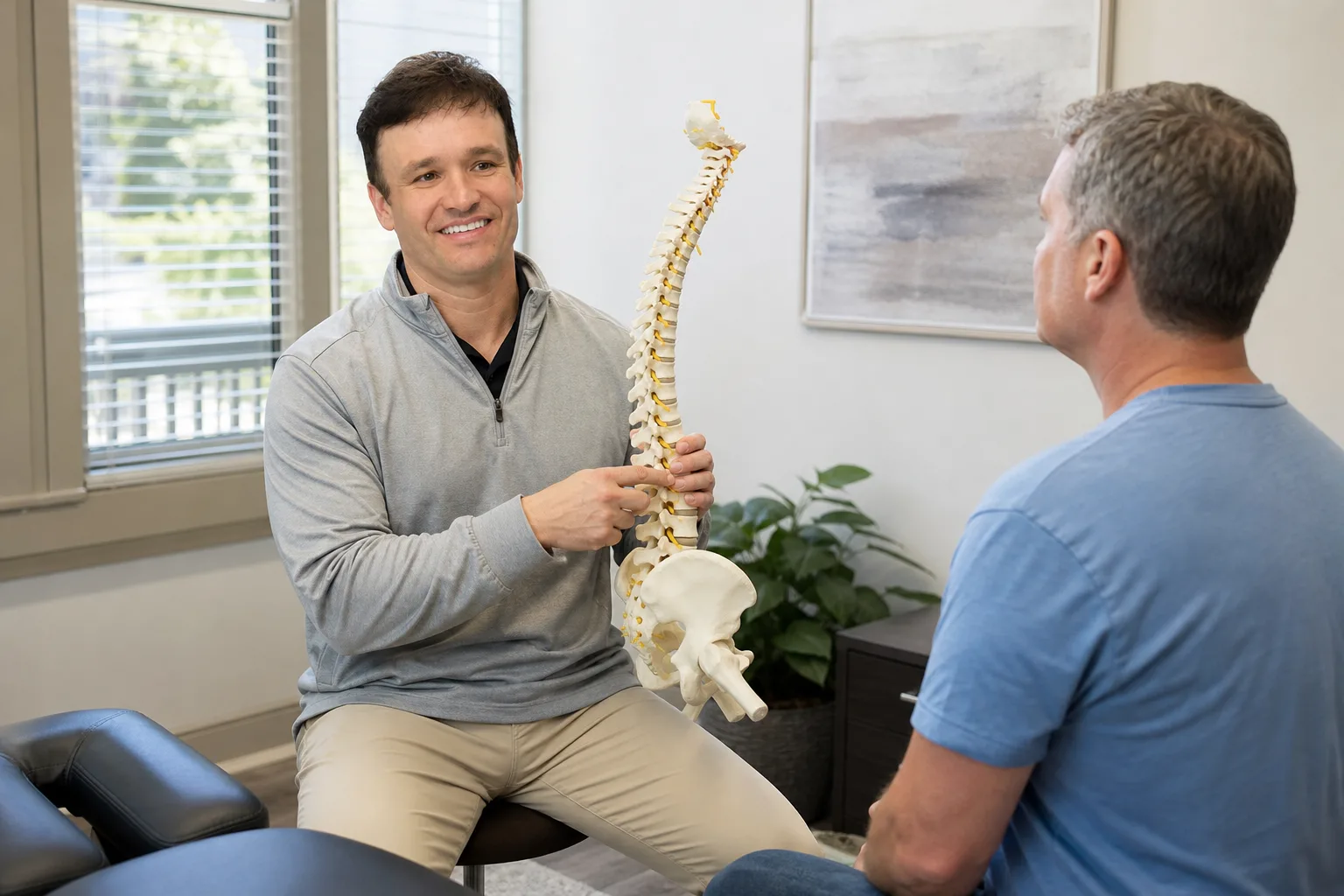
Back Pain Evaluations at Complete Healthcare
Complete Healthcare is a chiropractic office at 8420 Medical Plaza Dr, Suite 400, Charlotte, NC 28262.
- Phone: [(704) 510-1510](tel:+17045101510)
- Appointments: Request a back pain evaluation
- Page focus: Chiropractic evaluation and care for back pain, including lower back pain
Home › Back Pain Treatment and Chiropractic Care
Call or use the contact page to ask whether an evaluation may be a suitable next step. Confirm available techniques, appointment length, care schedules and other treatment details directly with the office.
When Back Pain Needs Prompt Medical Attention
Do not wait for a routine chiropractic appointment if back pain occurs with a potentially serious warning sign. Seek immediate or prompt medical assessment for:
- New bowel or bladder control problems
- Numbness around the groin or saddle area
- Significant or worsening weakness in an arm or leg
- Severe symptoms after a major collision, fall or other substantial trauma
- Fever with back pain
- Unexplained weight loss with persistent back pain
- Severe or rapidly worsening pain or neurological symptoms
Call emergency services if symptoms are severe, rapidly worsening or potentially life-threatening. The National Institute of Neurological Disorders and Stroke overview of low back pain and MedlinePlus back pain resources offer general information, but they cannot replace emergency care or an individual clinical assessment.

When to Consider a Chiropractic Evaluation
An evaluation may be worth considering for movement-related pain, stiffness, discomfort after prolonged sitting or pain following a minor strain when no serious warning signs are present. It does not automatically mean chiropractic care will be recommended.
A clinician may consider:
- Where the pain is located
- When and how it started
- Whether it is improving, stable or worsening
- Which movements or positions change it
- Whether pain, numbness or tingling travels into an arm or leg
- How symptoms affect work, sleep, mobility and daily activities
- Relevant injuries and health history
Pain after substantial trauma, or symptoms that could indicate significant neurological involvement, infection or another condition outside routine musculoskeletal care, may require medical assessment first.
Common Back Pain Patterns
The location and behavior of pain can help guide an evaluation, but symptoms alone cannot confirm a diagnosis. Back pain may appear in several ways:
- Sudden or acute pain: Symptoms begin after lifting, repetitive movement, prolonged sitting, a minor strain, a collision or a fall.
- Persistent pain: Discomfort continues and interferes with work, sleep, movement or routine activities.
- Recurring pain: Symptoms improve, then return in later episodes.
- Radiating symptoms: Pain, numbness or tingling travels into an arm or leg. Timely assessment may be appropriate because nerves could be involved.
- Injury-related pain: The force of the injury, symptom severity and warning signs all affect the appropriate next step.
Lower back pain, also called low back pain, involves the lumbar region and may occur with stiffness, tightness or restricted movement. Different conditions can cause similar symptoms, so pain location alone should not determine treatment.
For symptoms that travel from the lower back into a leg, read the practice's guide to sciatica symptoms and chiropractic care.
Chiropractic Care for Back Pain
Chiropractic care may be a conservative option for some musculoskeletal back pain, but it is not suitable for every person or every cause. An evaluation helps determine whether the symptoms fit routine chiropractic care or call for a different medical assessment.
Questions to ask about a care plan
Recommendations should follow an individual evaluation, not a promised result or preset schedule. Consider asking:
- What approach is proposed, and why?
- What are the goals of care?
- How will changes in pain and function be assessed?
- What are the possible risks and limitations?
- Which changes in symptoms would alter or stop the plan?
- When would another medical assessment be appropriate?
The National Center for Complementary and Integrative Health guidance on spinal manipulation reviews general evidence and safety considerations.
Complete Healthcare also provides spinal decompression information. That information does not mean spinal decompression is appropriate for every person, disc complaint or source of back pain.
To ask about an appointment, request a back pain evaluation or call [(704) 510-1510](tel:+17045101510).
What to Expect During a Back Pain Evaluation
A back pain evaluation usually begins with a discussion of the symptoms, how they started and how they affect daily life. Questions may include:
- Where is the pain located?
- When and how did it begin?
- Which movements, positions or activities make it better or worse?
- Does pain, numbness or tingling travel into an arm or leg?
- Was there a fall, collision, lifting event or other injury?
- Does the problem affect work, sleep, movement or routine activities?
- Are the symptoms improving, stable or worsening?
The clinician may review relevant health history, observe movement and assess areas of discomfort. The precise examination depends on the symptoms and the provider's scope. Contact Complete Healthcare to confirm its examination process, appointment length and follow-up procedures.
Is imaging always needed for lower back pain?
No. An uncomplicated episode of lower back pain does not always require an X-ray or MRI. Trauma, symptom duration, warning signs and examination findings can affect whether imaging or a referral is considered. This general guidance does not mean imaging is available at Complete Healthcare. For a known or suspected disc-related problem, see the practice's disc injury information.
Which Provider Should You See for Back Pain?
The right provider depends on the symptoms, health history, type of injury and presence of warning signs. This table offers general decision support and is not a list of services available from Complete Healthcare.
| Situation | Reasonable next step |
|---|---|
| Movement-related pain, stiffness, prolonged-sitting discomfort or a minor strain without warning signs | Consider a chiropractic or primary care evaluation |
| Persistent or recurring pain affecting work, sleep, movement or daily activity | Arrange a professional evaluation rather than relying only on self-care |
| Pain, numbness or tingling traveling into an arm or leg | Arrange a timely clinical assessment for possible nerve involvement |
| Pain after a substantial collision, fall or significant injury | Seek an injury evaluation; urgent assessment may be necessary depending on severity |
| New bowel or bladder changes, saddle numbness, major weakness, fever, substantial trauma or severe, rapidly worsening symptoms | Seek prompt medical care; use emergency services for severe or potentially life-threatening symptoms |
A chiropractor may evaluate certain musculoskeletal complaints. A primary care clinician can consider broader health concerns and coordinate testing or referrals. Serious warning signs may require urgent care or emergency services.
For collision-related information, read the practice's personal injury chiropractic information. Confirm case acceptance, insurance requirements and other administrative details with the office.
How to Prepare for Your Appointment
Write down where the pain occurs, when it began and which movements or positions change it. Include symptoms that travel into an arm or leg, along with any fall, collision, lifting event or other injury.
Useful details to bring include:
- When the current episode began
- Whether symptoms are improving, stable or worsening
- Activities, movements or positions that change the pain
- Any numbness, tingling or weakness
- Relevant injuries and health history
- Previous evaluations or imaging, if applicable
- Effects on work, sleep and mobility
- Questions about the proposed care and its goals
Ask the office about paperwork, records or other items to bring. The what to expect at your visit page provides more general appointment information.
Medical Information Sources
Medical information on this page is supported by the National Institute of Neurological Disorders and Stroke, MedlinePlus and the National Center for Complementary and Integrative Health. These sources provide general guidance. They do not verify Complete Healthcare's procedures, determine what is appropriate for an individual patient or replace clinical assessment and emergency care.
Local Service Area
- Complete Healthcare is a chiropractic office in Charlotte, North Carolina.
- The supplied office address is 8420 Medical Plaza Dr, Suite 400, Charlotte, NC 28262.
- The supplied office phone number is (704) 510-1510.
- The supplied appointment path is https://charlottecompletechiropractichealthcare.com/contact-us/.
- No verified office hours, neighborhood, landmark, directions, parking, accessibility details, service area, map URL or Google Business Profile URL were supplied, so those details were not added.
Frequently Asked Questions
Can a chiropractor help with back pain?
Chiropractic care may be an option for some musculoskeletal back pain. Suitability depends on the possible cause, health history, evaluation findings and presence of warning signs. An evaluation is needed before care can be recommended.
What kind of doctor should I see for a back injury?
The appropriate provider depends on the injury and symptoms. A chiropractor may evaluate certain musculoskeletal complaints. Severe or complex symptoms may be better assessed by a primary care clinician, urgent care center, emergency department, orthopedist, neurologist or another provider. These provider types are not presented as services available through Complete Healthcare.
When is back pain an emergency?
Back pain may need immediate or prompt medical care when it occurs with new bowel or bladder problems, numbness around the groin or saddle area, significant or worsening limb weakness, fever, unexplained weight loss, major trauma or severe, rapidly worsening symptoms. Use emergency services for severe or potentially life-threatening symptoms.
Will I need an X-ray or MRI for lower back pain?
Not everyone with lower back pain needs an X-ray or MRI. A clinician considers the history, symptom duration, trauma, neurological symptoms, examination findings and other warning signs when deciding whether imaging or referral may be appropriate. This does not mean imaging is available at Complete Healthcare.
What happens at a first chiropractic visit for back pain?
A first visit generally begins with a review of where the pain occurs, when it started, what affects it, whether it travels and how it limits daily activities. The clinician may also review relevant health history and perform an examination suited to the symptoms and the provider's scope before discussing chiropractic care or another type of assessment.
How can I schedule a back pain evaluation?
Call Complete Healthcare at (704) 510-1510 or use the practice's contact page to ask about an appointment. The office is at 8420 Medical Plaza Dr, Suite 400, Charlotte, NC 28262.
