Radial shockwave therapy (RSWT), also called radial pressure wave therapy, uses a handheld applicator to deliver mechanical pressure waves across a selected area without an incision. Its suitability depends on the condition being evaluated, the treatment goal, and the available equipment. Call Complete Healthcare to confirm whether radial technology is currently offered.
Radial Shockwave Therapy at a Glance
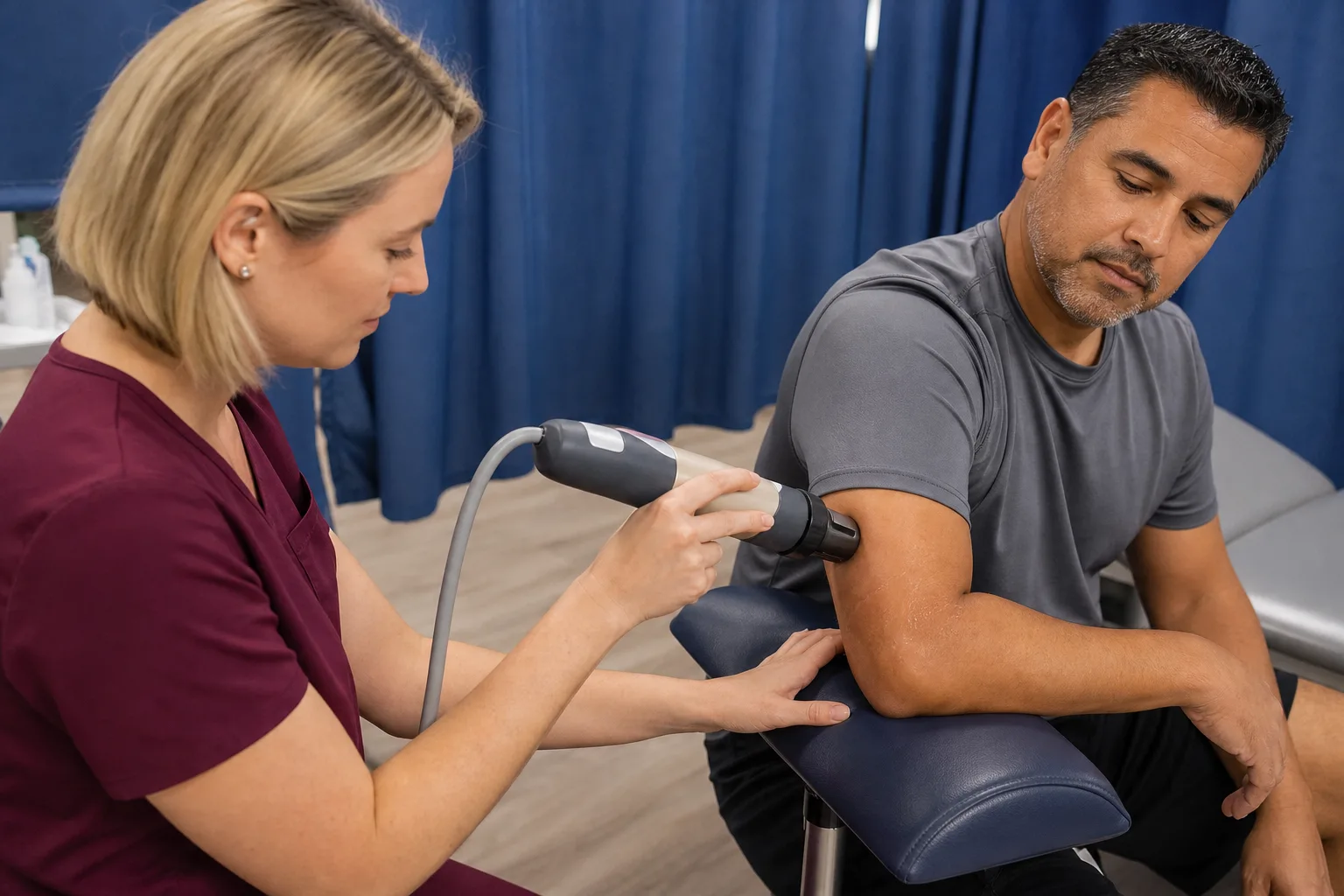
- What it is: A noninvasive technique that delivers mechanical pressure waves through a handheld applicator. The waves spread across a selected area.
- Other names: Radial pressure wave therapy and RSWT. Terminology may vary among devices, manufacturers, and clinical publications.
- Radial versus focused: Radial waves generally disperse across a broader region. Focused technology directs energy toward a more defined target. Exact characteristics depend on the equipment.
- Evaluation: Suitability cannot be determined by the location of discomfort alone. Health history, clinical findings, the suspected source of symptoms, and treatment goals all matter.
- Local availability: The supplied practice information does not confirm which type of shockwave equipment is currently used. [Call Complete Healthcare](tel:+17045101510) before scheduling.
- Charlotte office: 8420 Medical Plaza Dr Suite 400, Charlotte, NC 28262.
- Phone: [(704) 510-1510](tel:+17045101510).
What Is Radial Shockwave Therapy?
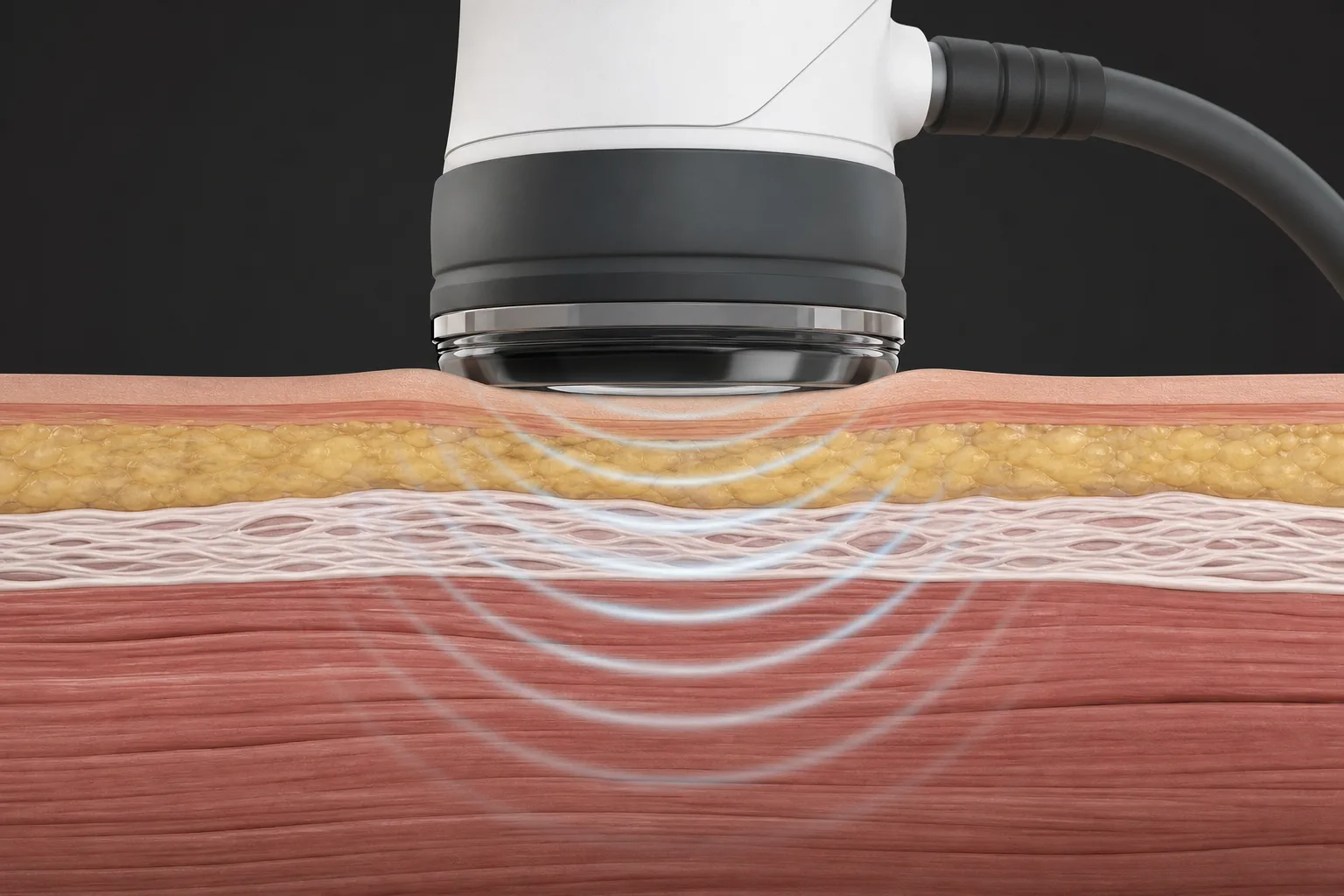
Radial shockwave therapy sends mechanical pressure waves from a handheld applicator into a selected treatment area. The waves spread outward from the applicator rather than concentrating on one defined target, and the procedure does not require an incision.
The terms “radial shockwave therapy,” “radial pressure wave therapy,” and “RSWT” often describe the same general approach. However, procedures marketed as “shockwave therapy” do not all use the same wave type, device, or settings. Ask for the name of the proposed technology and equipment rather than assuming every shockwave treatment is identical.
An evaluation is needed to decide whether this approach makes sense for a particular musculoskeletal concern. No result can be guaranteed. For background on the broader treatment category, read Complete Healthcare’s shockwave therapy overview.
Radial vs. Focused Shockwave Therapy
The broad distinction is how the energy is delivered. Radial pressure waves spread outward from the applicator, while focused shockwave technology concentrates energy toward a selected target. Device design and terminology vary, and neither option is inherently better for every concern.
| Consideration | Radial shockwave therapy | Focused shockwave therapy |
|---|---|---|
| Energy pattern | Disperses outward from the applicator | Concentrates energy toward a selected target |
| Area addressed | Generally broader and more dispersed | Generally more defined |
| Applicator use | May be moved across a selected region | Directed toward a selected target |
| Technology selection | Depends on the evaluation, intended target, device characteristics, available equipment, and treatment goal. | |
Before treatment, the clinician should identify the intended target, explain why a particular technology is being considered, and state which device and wave type would be used. Technical details should be checked against documentation for the actual equipment, not inferred from the treatment name.
Who May Consider an Evaluation?
Someone with an ongoing musculoskeletal concern may ask about radial shockwave therapy, but symptoms and pain location alone do not establish candidacy. The conditions treated by Complete Healthcare with its current shockwave equipment have not been verified for this page.
Useful questions for an evaluation include:
- What structure or condition is thought to be causing the symptoms?
- Why is radial therapy being considered instead of focused therapy or another option?
- What evidence applies to the specific concern under evaluation?
- Which device and wave type would be used?
- Who performs the procedure, and what qualifications do they hold?
- How will progress be measured?
- What findings would lead to postponing, stopping, or changing the plan?
New, severe, unexplained, or rapidly worsening symptoms may need medical evaluation before any shockwave treatment is considered.
Potential Role and Important Limitations
Shockwave therapy may be considered as one noninvasive part of a broader care plan. The reason for using it, the supporting evidence, and the expected outcome depend on the diagnosis and the technology involved. General information cannot establish that radial treatment is suitable for a particular person.
Keep these limits in mind:
- Results cannot be guaranteed.
- Radial and focused technologies are not interchangeable.
- There is no universal number of sessions for every patient or condition.
- Pain or discomfort alone is not enough reason to begin treatment.
- Evidence should be considered for the specific diagnosis and device.
- An individual evaluation is still necessary.
The Cleveland Clinic overview of extracorporeal shock wave therapy offers general information about potential uses, risks, and treatment considerations. It does not verify Complete Healthcare’s equipment, protocols, or current service availability.
What to Expect Before, During, and After Treatment
Preparation, appointment length, equipment settings, and aftercare vary by device, treatment area, and provider protocol. Complete Healthcare’s process for radial treatment has not been confirmed.
Before treatment: The clinician should evaluate the reason for treatment and the proposed treatment area. Share relevant medications, health conditions, recent procedures, and changes in symptoms. Ask which technology will be used and whether any preparation is required. For general office information, review what to expect at your visit.
During treatment: A coupling medium may be applied to the skin before the applicator is moved across the selected region. Sensations may include tapping, pulsing, or discomfort. The clinician should explain where treatment will be applied and when the procedure should be paused or reassessed.
After treatment: Temporary tenderness or soreness can occur. Follow the treating professional’s activity and follow-up instructions because recovery guidance depends on the person, treatment area, equipment, and protocol.
Safety Information to Discuss Before Treatment
Possible temporary effects in the treated area include tenderness, redness, swelling, bruising, and soreness. Their likelihood and duration vary by person, treatment area, device, and settings.
Tell the treating professional about:
- Current medications
- Bleeding or clotting concerns
- Pregnancy
- Implanted devices
- Recent procedures
- Infection or skin concerns near the proposed treatment area
- Reduced sensation
- Other significant health conditions
This information helps the clinician decide whether treatment should proceed, be modified, be postponed, or be discussed with another healthcare provider. Exact contraindications must be checked against the documentation for the device being used and reviewed by a qualified clinician.
Symptoms That Need Prompt Medical Attention
Shockwave therapy is not a substitute for emergency care. Seek urgent medical attention for sudden weakness, loss of bladder or bowel control, major trauma, chest pain, or other signs of a medical emergency. Severe, unexplained, or rapidly worsening symptoms should also be assessed by an appropriate healthcare professional.
Contact Complete Healthcare
Complete Healthcare is a chiropractic practice at 8420 Medical Plaza Dr Suite 400, Charlotte, NC 28262. The practice has a general shockwave therapy page, but the supplied information does not establish whether its current equipment is radial, focused, or another type.
Before making an appointment, contact Complete Healthcare or [call (704) 510-1510](tel:+17045101510). Ask which shockwave technology is available, who performs the procedure, and whether an evaluation may be appropriate for your concern. You can also review the practice’s chiropractic care information.
Source and Medical Note
General educational source: Cleveland Clinic — Extracorporeal Shock Wave Therapy.
This medically reviewed resource provides general background on extracorporeal shockwave therapy, possible temporary effects, and treatment considerations. It does not verify Complete Healthcare’s equipment, provider qualifications, protocol, or service availability.
This page is for general education. It does not replace an individual evaluation, diagnosis, emergency care, or device-specific instructions. Technical and safety details vary by equipment and should be confirmed with a qualified clinician and the applicable manufacturer documentation.
Local Service Area
- Complete Healthcare is a chiropractic practice in Charlotte, North Carolina.
- Verified supplied address: 8420 Medical Plaza Dr Suite 400, Charlotte, NC 28262.
- Verified supplied phone number: (704) 510-1510.
- Call before scheduling to confirm whether radial shockwave technology is currently available at the Charlotte office.
Frequently Asked Questions
What is radial shockwave therapy?
Radial shockwave therapy is a noninvasive technique that sends mechanical pressure waves from a handheld applicator into a selected area. The waves spread outward from the applicator. An evaluation is needed to determine whether the technology is appropriate for a particular musculoskeletal concern.
Is radial shockwave therapy the same as focused shockwave therapy?
No. Radial therapy disperses pressure waves outward from the applicator, while focused therapy concentrates energy toward a selected target. The choice depends on the intended target, clinical findings, available equipment, and treatment goal.
Is radial pressure wave therapy the same as RSWT?
Radial pressure wave therapy and RSWT are commonly used as alternate names for radial shockwave therapy. Because terminology and technical characteristics vary among devices, manufacturers, and publications, ask the provider to identify the specific technology being proposed.
Does radial shockwave therapy hurt?
Treatment may cause tapping, pulsing, or discomfort. Sensation varies with the treatment area, device settings, and individual sensitivity. Tell the treating professional if the discomfort is difficult to tolerate so the procedure can be paused or reassessed.
How many radial shockwave therapy sessions will I need?
There is no single schedule suitable for everyone. The number and spacing of sessions depend on the condition being evaluated, response to care, clinical judgment, and device protocol. The provider should explain how progress will be monitored rather than guarantee a result.
Are there side effects after radial shockwave therapy?
Temporary soreness, tenderness, redness, swelling, or bruising can occur in the treated area. Before treatment, discuss expected effects, activity guidance, and reasons to contact a healthcare professional.
Does Complete Healthcare offer radial shockwave therapy?
The supplied information does not confirm whether Complete Healthcare currently uses radial shockwave technology. Call (704) 510-1510 before scheduling to ask whether radial, focused, or another shockwave technology is available at the Charlotte office.
Sources & References
Contact Us to confirm which shockwave technology is available and ask about an evaluation. The office is at 8420 Medical Plaza Dr Suite 400, Charlotte, NC 28262.
